

Saving money doesn’t have to mean giving up everything you enjoy. In fact, some of the most effective financial habits start with small, simple actions that take just a few minutes each day.
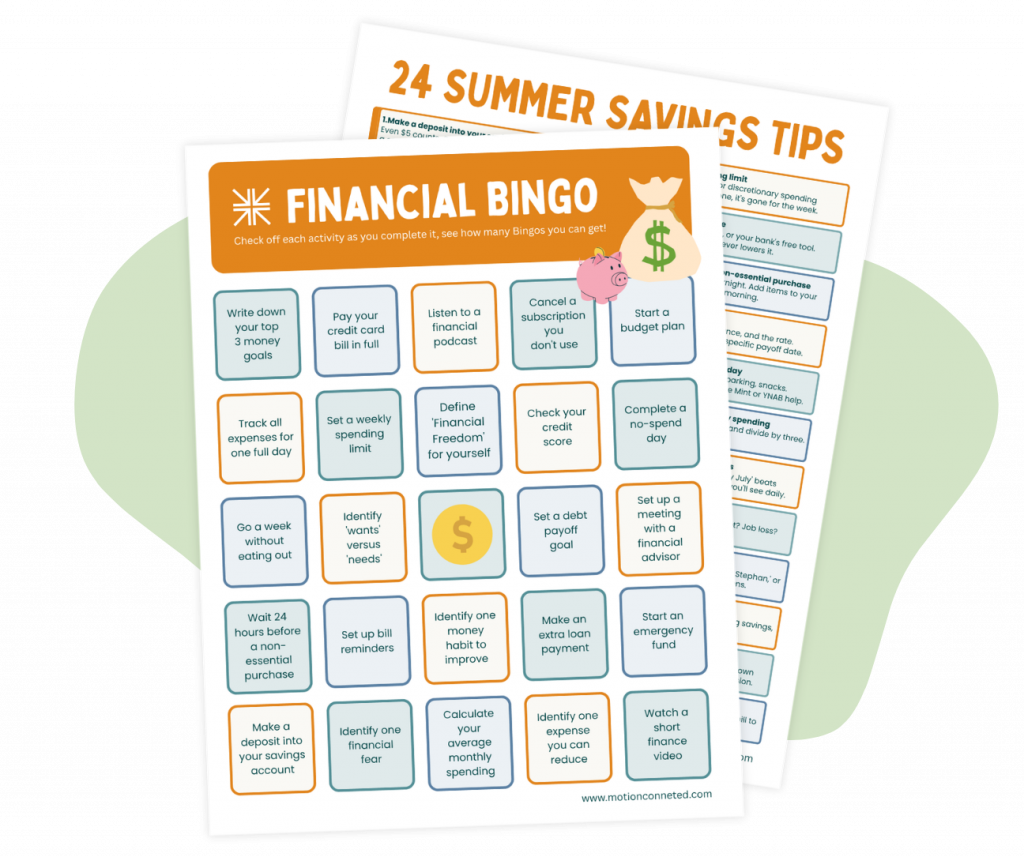
This month we’re sharing free Financial Wellbeing tips, including Financial Bingo and 24 Summer Savings Tips. A fun, approachable way to build healthier money habits one square at a time. Each activity is designed to create progress without feeling overwhelmed.
Whether you’re saving for a vacation, paying off debt, building an emergency fund, or simply looking to reduce financial stress, every small decision adds up.
1. Give Yourself a Weekly Spending Limit
Instead of trying to manage your budget one month at a time, break it into smaller, more manageable goals. Set yourself a weekly spending limit for discretionary purchases like coffee, dining out, shopping, or entertainment. This makes it easier to recognize when you’re approaching your limit before you’ve overspent.
Don’t make the number so restrictive that it feels impossible to stick to. The goal is to build awareness and consistency—not perfection. Many banking apps even let you categorize spending or send alerts when you’re getting close to your limit, making it easier to stay accountable.
2. Try a No-Spend Day
Choose one day each week where you intentionally avoid spending any money. That means skipping the coffee shop, packing your lunch, and finding free ways to enjoy your day.
A no-spend day isn’t about depriving yourself—it’s about breaking automatic spending habits. Take a walk, visit a local park, read a book from the library, or enjoy a movie at home. These days can help you appreciate what you already have while giving your budget a small boost.
3. Wait 24 Hours Before Buying Something
Impulse purchases happen to everyone, especially with online shopping only a click away. Before making any non-essential purchase, give yourself a full 24 hours to think about it.
Often, you’ll realize you didn’t really need the item in the first place. If you still want it after waiting a day, you can make the purchase knowing it was intentional rather than emotional. This simple habit can prevent hundreds of dollars in unnecessary spending over the course of a year.
4. Review Your Monthly Subscriptions
Streaming services, fitness apps, subscription boxes, music services, and software memberships can quietly add up over time. Take a few minutes to review your bank or credit card statements and identify recurring charges.
Ask yourself whether you’re actually using each service enough to justify the cost. Canceling just one or two unused subscriptions could save you $100 or more each year without affecting your daily life.
5. Find Small Ways to Eat at Home More Often
Dining out is one of the easiest areas where spending can creep up, especially during the summer when patios, food trucks, and social gatherings are everywhere.
You don’t have to eliminate restaurants completely. Instead, challenge yourself to prepare a few extra meals at home each week. Meal prepping lunches, grilling dinner at home, or bringing snacks on road trips can reduce food expenses while often leading to healthier eating habits as well.
6. Build Your Emergency Fund One Small Deposit at a Time
Saving money can feel overwhelming if you think you need thousands of dollars to get started. The reality is that consistency matters more than the amount.
Whether you save $5, $20, or $50 each paycheck, you’re creating a habit that will serve you well over time. Consider opening a separate high-yield savings account and setting up automatic transfers so saving happens without you having to think about it.
7. Track Where Your Money Actually Goes
Many people have a general idea of what they spend, but few know exactly where every dollar goes. Tracking your expenses—even for just one week—can reveal spending patterns you didn’t notice before.
Write down every purchase or use a budgeting app to categorize your expenses. You may discover that frequent convenience purchases, online shopping, or daily snacks are adding up faster than expected. Awareness is often the first step toward making meaningful changes.
8. Set Clear Financial Goals
Saving money is much easier when you know what you’re saving for. Rather than simply saying, “I want to save more,” create specific goals with a purpose and timeline.
Maybe you’re building an emergency fund, paying off a credit card, saving for a vacation, or planning to buy your first home. Writing these goals down—and checking in on them regularly—can help you stay motivated when it’s time to make spending decisions.
9. Take Advantage of Free Financial Resources
You don’t have to become a financial expert overnight. There are countless free tools that can help you improve your financial knowledge a little at a time.
Many employers offer financial wellness programs through their benefits package or Employee Assistance Program (EAP). You can also explore free budgeting apps, financial podcasts, YouTube channels, and educational websites that make learning about money approachable and practical.
10. Focus on Progress, Not Perfection
Financial wellness isn’t about cutting out every luxury or following a perfect budget every month. Life happens, and there will always be unexpected expenses.
Instead, celebrate the small wins. Maybe you packed your lunch three times this week, skipped an impulse purchase, or transferred money into savings. Those small decisions compound over time and create lasting financial habits that support your long-term goals.
Keep the Momentum Going
Building healthy financial habits is about making intentional choices consistently. Whether you save an extra $10 this week, cook one more meal at home, or finally cancel that unused subscription, those small wins can create lasting financial confidence over time.
Financial wellness is an important part of overall wellbeing. By focusing on small, sustainable habits today, you’ll be setting yourself up for greater confidence, less financial stress, and more freedom to enjoy the moments that matter most.