Employee wellbeing programs are evolving, but one challenge remains: getting employees to participate.
What are the most successful programs doing differently? Where are employers investing their resources? And what should HR and benefits leaders prioritize heading into 2027?
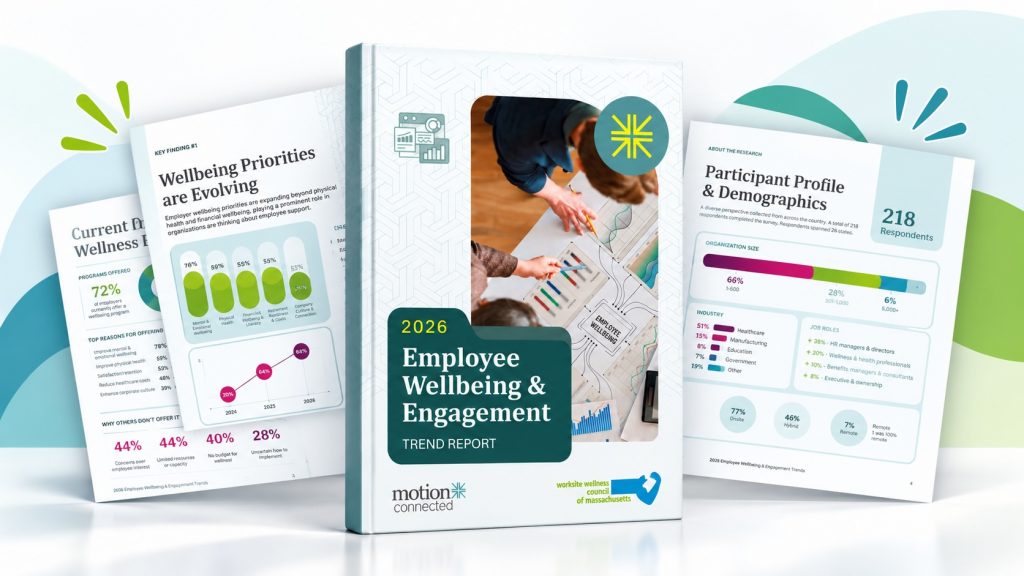
Motion Connected’s newly released 2026 Employee Wellbeing & Engagement Trend Report explores these questions and more. Now in its third year, the report features insights from 218 survey respondents across 26 states, offering employers a valuable look at workplace wellbeing trends, engagement challenges, and emerging opportunities.
Developed in partnership with the Worksite Wellness Council of Massachusetts (WWCMA), this annual report helps employers benchmark their wellbeing strategies against real-world data and make informed decisions for the year ahead.
Key Highlights from the 2026 Employee Wellbeing Trend Research
From evolving employee needs to new opportunities for engagement, this year’s data found several key findings.
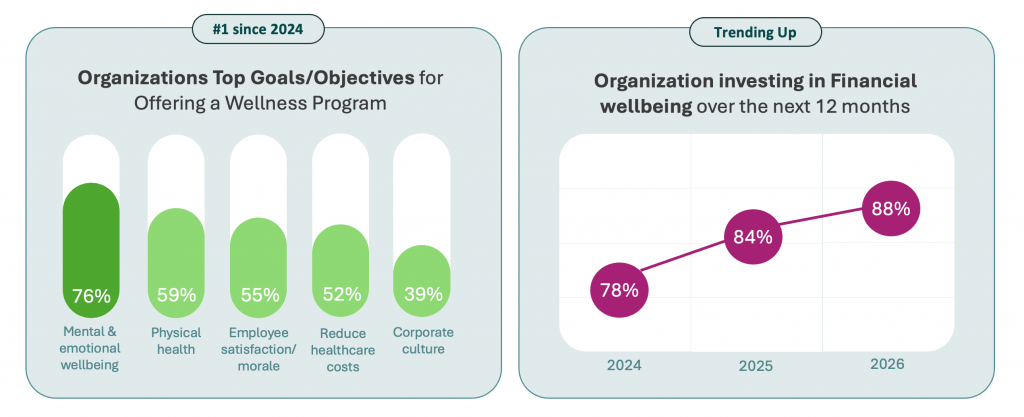
Wellbeing priorities are evolving. Employer wellbeing priorities increasingly extend beyond physical health, with mental health and financial wellbeing playing a prominent role in how organizations are thinking about employee support. Mental and emotional wellbeing remains the #1 reason employers offer a program since the trend research began in 2024, while financial wellbeing continues to see increased investment year over year.
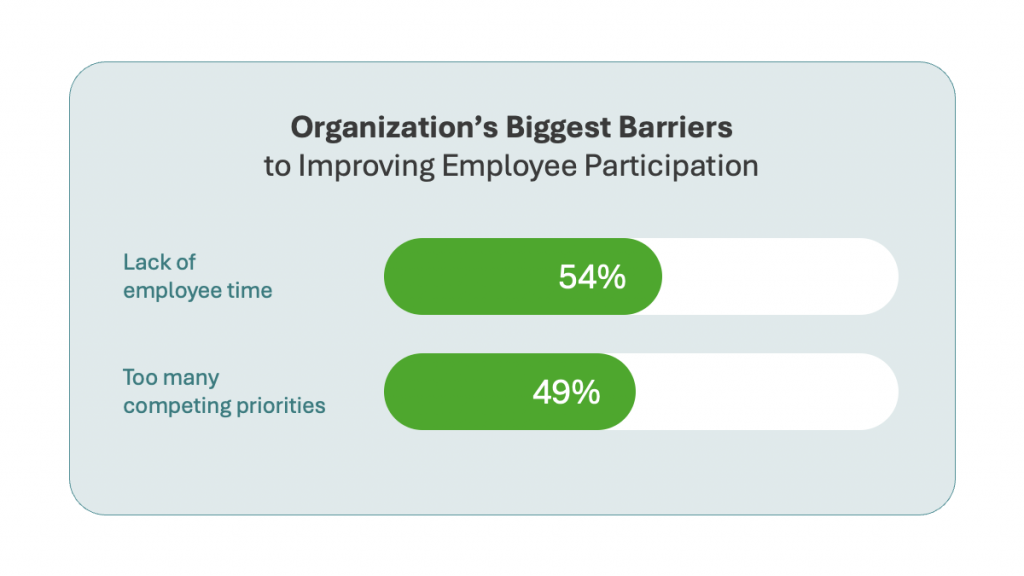
Time is the biggest barrier to engagement. 54% cite lack of employee time and 49% cite competing priorities as the biggest barriers to getting employees to engage. Together, the findings point to the importance of making wellbeing easy to access, understand and fit into the workday.
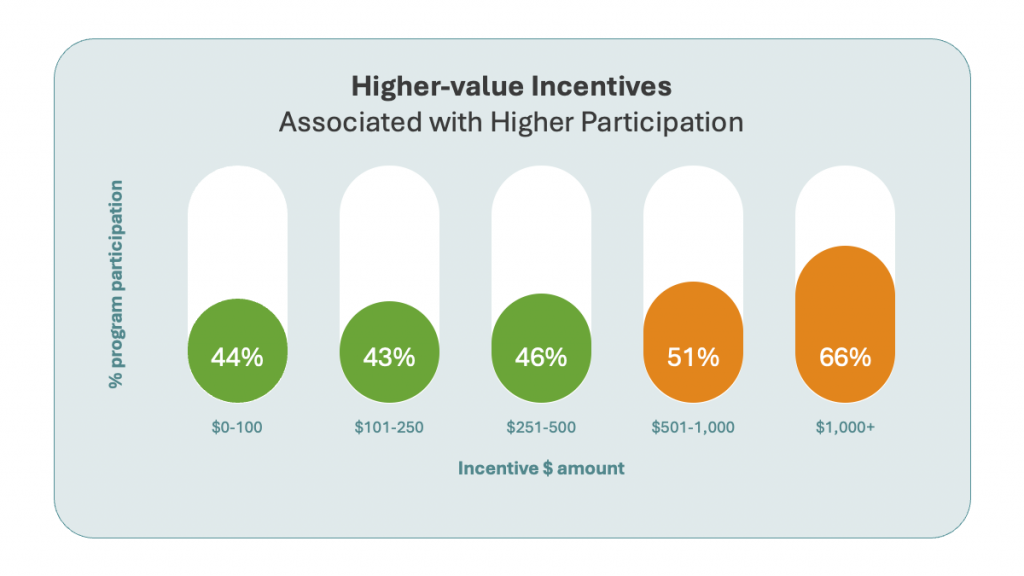
Higher-value incentives are associated with higher participation. Average participation ranges from 43% among programs offering $0–$100 in annual incentive value to 66% among those offering more than $1,000.
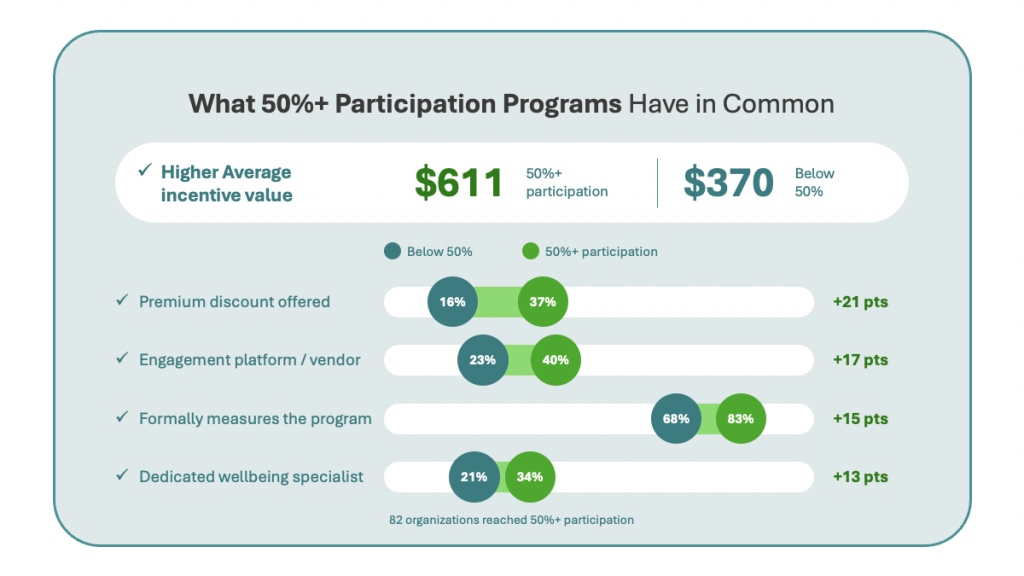
Higher-participation programs share several characteristics. Programs reaching 50%+ participation report higher average incentive values, more likely to offer premium discounts, have dedicated ownership, use an engagement platform and formally measure the program.
Beyond the numbers, the report also highlights real-world examples of how organizations are approaching employee wellbeing, providing inspiration for employers looking to strengthen their own programs.
Turn Insights Into Action for 2027
As workplace wellbeing continues to evolve, simply offering a wellness program isn’t enough. Employers need to consider how their initiatives fit into employees’ lives, what motivates participation, and how to measure success.
Whether you’re looking to increase participation, evaluate your current strategy, or explore new ways to support your workforce, understanding what other organizations are doing can help guide your next steps.
But understanding the trends is only the beginning. The next step is putting those insights into action.
2027 Employee Wellbeing Program Planning Guide
To help employers move from insights to action, we’ve also created a 2027 Employee Wellbeing Program Planning Guide, built around findings from this year’s survey.
This resource includes 10 printable worksheets designed to help HR, benefits, and wellness leaders evaluate their current programs, identify opportunities for improvement, and build a stronger strategy for the year ahead.
From identifying participation barriers and reviewing incentives to improving communication and measuring success, the guide helps you turn what you’ve learned into a practical plan for 2027.
Ready to Plan for a Healthier 2027?
A successful workplace wellbeing strategy starts with understanding what employees need and creating opportunities for them to engage.
With the 2026 Trend Report and 2027 Planning Guide, you’ll have both the research and practical tools to make more informed decisions for your workforce.
Start by exploring the data, then put your insights into action.